
CRAFT AS FOUNDATION
At Urvashi Kaur, craft is structure. Each garment begins with the hand, where tradition meets innovation to create clothing rooted in both heritage and modern use. We work directly with artisan communities across India - dyers, weavers, embroiderers, and block printers, whose knowledge has been refined over generations. Their skills shape every collection, transforming living traditions into contemporary prêt.
MATERIAL ECOSYSTEM
Our textiles are sourced from India’s weaving clusters: linen and cotton jamdani from Bengal, leheriya from Jaipur, khadi and Bhujodi from Kutch, Chanderi and Maheshwari from Madhya Pradesh, and Kota doriya from Rajasthan, among others. Each fabric represents a network of livelihoods and a record of place, technique, and time.
DESIGN PHILOSOPHY
Founded sixteen years ago, the label was built to create a dialogue between culture, craft, and conscious design. Our work rests on five principles:
Inclusion: size-fluid, ungendered silhouettes
Mindfulness: slow, zero-waste practices
Reinvention: translating tradition into trans-seasonal design
Sustainability: as philosophy, and not a trend
Transparency: through digital garment passports tracing each process
For us, fashion is impact, responsibility, and narrative.
At Urvashi Kaur, craft defines luxury. The label is rooted in heritage, made relevant through reinvention, and built to endure in both form and meaning.
DRAPE ANTIFIT | FORM / FLUIDITY / FUNCTION
Drape defines our aesthetic. Antifit moves beyond rigid tailoring, embracing fluid, size-adaptive silhouettes that follow the body’s natural movement rather than forcing conformity.
Each piece explores form through textile behavior - how fabric drapes, folds, and moves. Black is used to emphasis structure, proportion, and surface detail.
Our approach blends Eastern textile philosophies with Western construction, creating contemporary design rooted in local craft, material intelligence, and cultural authenticity.
After sixteen years of practice, Drape Antifit reflects our core values: fluidity, thoughtful construction, and honest self-expression.

Material Memory
Renew is our ongoing dialogue with material memory. As a design practice built around the belief that nothing is ever truly waste, we believe that every fragment, swatch, or sample in our studio holds potential.
Post-consumer brocade sarees, handloom offcuts, and test fabrics are reimagined as new garments through meticulous handwork.
Each Renew piece is co-created with artisans who reconstruct fragments into coherent forms. What begins as remnant is layered, stitched, and redefined into cloth once again . This process is both craft and philosophy: care made visible.

Brocade Reinventions
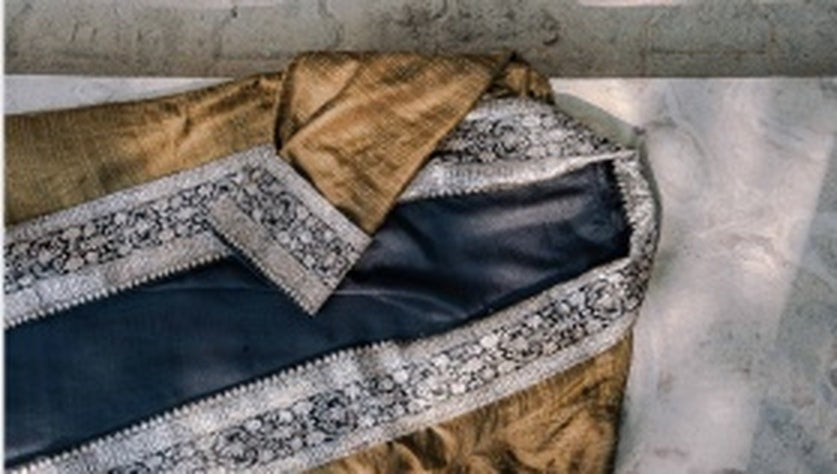
Brocade, traditionally woven for celebration, often ends up stored or discarded. In Renew, post consumer sarees/dupattas are dismantled and hand-sewn into mosaic-like panels, as shimmering surfaces representative of memory and continuity. Each placement is improvised by the artisan, making every garment singular.
Luxury here lies in longevity and respect: extending the life of fabric and heritage through recontextualised design.

Jogakbo Dialogues
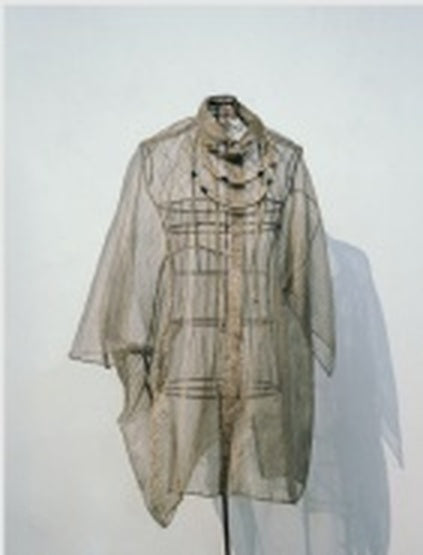
A serendipitous experiment in our studio led to the adoption of Jogakbo, the Korean tradition of geometric patchwork, as a zero-waste construction method. In our Shinsei collection, offcuts are assembled into translucent grids with visible seams, leading to structures that are double-sided, modular, and reversible.
The technique values fragments, and prides itself on creating order through irregularity. Transparency becomes both visual and ethical, creating an honest record of process and hand.

Labour and Legacy
Renew is labour-intensive by design. It relies on the dexterity of darners, stitchers, and embroiderers who translate fragments into coherence. Each garment acts as evidence: of continuity, material, craft, and community.
Through Renew, waste transforms into resource, and repair becomes a creative act. Renew is circularity not as trend, but as practice, where sustainability is built from skill, care, and time.

Kantha | The Rhythm Of Continuity
Originating in Bengal, Kantha began as a domestic act of renewal: women layering worn saris and binding them with running stitches. The technique transforms discarded cloth into new surfaces through rhythm and repetition.
At Urvashi Kaur, Kantha is used structurally as much as decoratively. Stitches reinforce seams, connect panels, or add surface depth. Each line is intentional, each thread allowed to breathe.
We also work with women in our surrounding communities, teaching and reviving the lost art of Kantha within their homes. Every stitch sustains livelihoods and carries forward a lineage of repair, rhythm, and resilience.

Leheriya | The Language Of Bound Colour
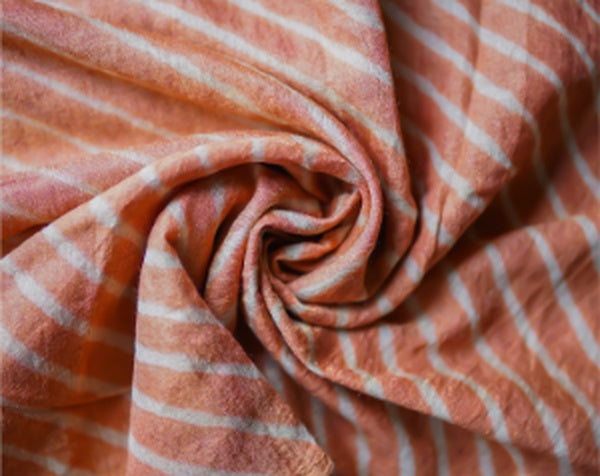
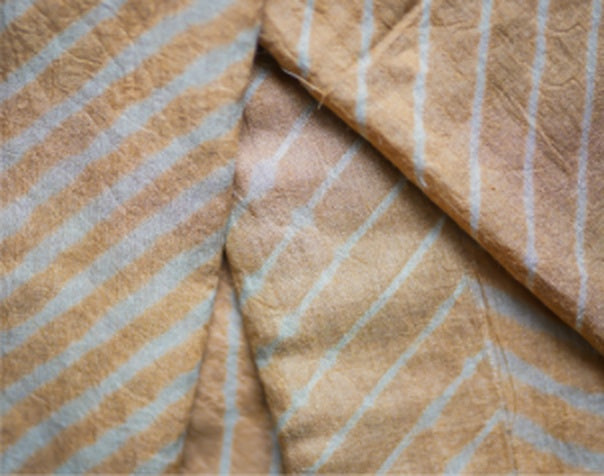
Leheriya, a resist-dye technique from Rajasthan, is created by diagonally rolling and binding fabric before dyeing, creating rhythmic waves of colour that mirror movement and monsoon.
We reimagine this craft in muted, earthy palettes, applying it to jackets, overlays, and separates beyond festive wear.
Our leheriya is produced in collaboration with a fourth-generation master artisan, a National Awardee, whose family continues the practice with precision and patience. Through him, each piece becomes a meditation on time, process, and climate, representing colour as memory, and discipline as art.

Block Printing | The Imprint Of Hand
Block printing is one of India’s oldest surface design techniques, where carved wooden blocks are dipped in dye and stamped onto cloth in exact repetition. Alignment demands mastery, and variation is inevitable.
In our collections, motifs are pared back to grids, stripes, and abstracts. We often layer block prints with Kantha or patchwork to create depth and dimension. Each slight misprint is preserved and celebrated, serving as a reminder that imperfection is the human mark of the handmade. For artisan families who have printed for generations, this reinterpretation keeps both relevance and livelihood intact.

Chaap Silai | Signature Value Addition
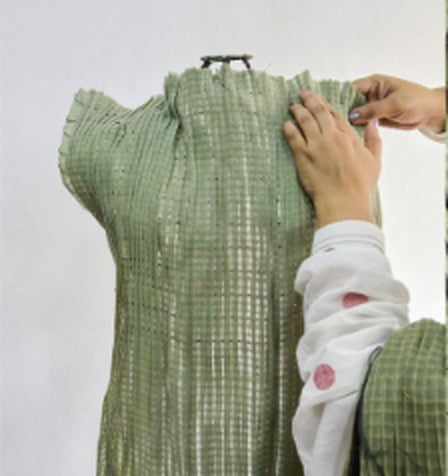
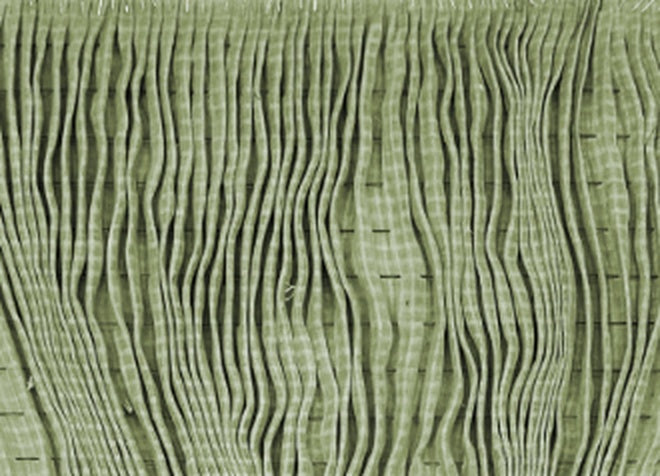
Chaap Silai, our in-house technique of micro-pleating, brings adaptability and ease to the garment. Crafted by hand, these fine pleats allow the fabric to expand and contract, enhancing movement and comfort.
Beyond functionality, the technique adds surface richness and textural depth, transforming simple silhouettes into elevated, versatile pieces. It embodies our belief that luxury lies in construction and process, and not in ornamentation.

Eco-Prints | Botanical Impressions
Eco-printing merges craft and ecology. Leaves, flowers, and natural pigments are pressed onto fabric to create organic imprints, each one unique.
In the Shinsei collection, eco-prints on mulberry silk express renewal and resilience. These natural imprints make nature a collaborator in design, creating a literal impression of landscape and time on cloth.

Jamdani | Weaving Air Into Pattern
Woven by hand in Bengal, Jamdani is one of India’s most intricate handloom traditions. Motifs are added individually by supplementary weft, creating patterns that seem to float within translucent fabric.
At Urvashi Kaur, Jamdani moves beyond saris into tunics, jackets, and overlays. Traditional motifs are reinterpreted into minimal grids and abstract forms, allowing the weave to breathe. Every meter sustains livelihoods and ensures continuity of an endangered craft.

Maheshwari | Geometry In Duality
Originating in Madhya Pradesh, Maheshwari combines cotton warps and silk wefts to create fabric that is light yet lustrous. Known for its reversible borders and structured geometry, it represents balance in material form.
We remove heavy zari, render it in subtle palettes, and reimagine Maheshwari as gender-fluid drapes and separates. By integrating it into everyday prêt, we extend its relevance and provide sustainable work for traditional weavers.

Chanderi | The Architecture Of Transparency
Chanderi is defined by its lightness, through silk and cotton held together under perfect tension to create fabric that feels like air. Traditionally ornate, we present it stripped down to its essence: sheer structure and quiet strength.
Used for overlays, pleated separates, and modular layers, Chanderi in our collections proves that transparency itself can be form - delicate yet durable, architectural yet fluid.

Kota Doriya | Strength In The Grid
From Rajasthan, Kota Doriya (or Kota Masuria) is recognised by its khat -a fine check created by alternating silk and cotton yarns. The weave is airy yet tensile, ideal for layered silhouettes.
We reframe Kota beyond saris, using its grid for modular jackets and tunics. Sometimes left sheer, sometimes quilted, it reflects our design ethos: structure balanced by breathability. Each piece sustains master weavers and their craft ecosystems in Kota.

Linen | Fluid Structure
Handspun and handwoven in Gujarat and Bengal, Linen is prized for breathability and texture. Its natural slub and irregularity are embraced as signs of authenticity.
In our collections, linen becomes a base for micro-pleating, resist dyeing, and eco printing. It holds both structure and drape-adapting seamlessly across seasons and embodying our philosophy of conscious creation and adaptive design.

Mulberry Silk | Quiet Precision
In the Shinsei collection, Mulberry Silk becomes a study in precision and restraint. Handwoven in Bengal and Orissa, it is known for its strength and natural sheen.
Through micro-pleating and eco-printing, the fabric transforms into sculptural yet wearable forms. Each piece merges craftsmanship with innovation, redefining silk as both traditional and contemporary.

Eri Silk | Sustainable Luxury
Known as peace silk, Eri is harvested without harming the silkworm, aligning directly with our commitment to mindful production. Spun and woven in Assam and Meghalaya, it has a matte texture and exhibits natural resilience.
We use Eri for layered outerwear and adaptive separates. Subtle hand-dyeing and minimal detailing allow the textile’s integrity to remain central to our vision: luxury defined through ethics and tactility.

Kala Cotton | Indigenous Strength
Native to Kachchh, Kala Cotton is a rain-fed, chemical-free crop that thrives in arid soil. Spun and woven by hand, it is both robust and regenerative.
In our collections, its dense weave shapes are structured drapes and trans-seasonal separates. Imperfect, tactile, and inherently sustainable, Kala Cotton embodies authenticity and self-reliance.

Handloom Denim | Tradition Reinvented
Handloom Denim redefines an industrial textile through the lens of craft. Woven manually using natural fibres, it replaces uniformity with character and softness.
Used for relaxed tailoring and layered dressing, it merges durability with comfort, representing innovation rooted in heritage, with every meter celebrating the slow rhythm of handwoven modernity.